A practical preparedness journal
Make the next useful decision.
Preparedness improves when it fits the household you have: its hazards, budget, storage, health needs and available time. We turn reliable guidance into small tests you can actually complete.
Build a water budget →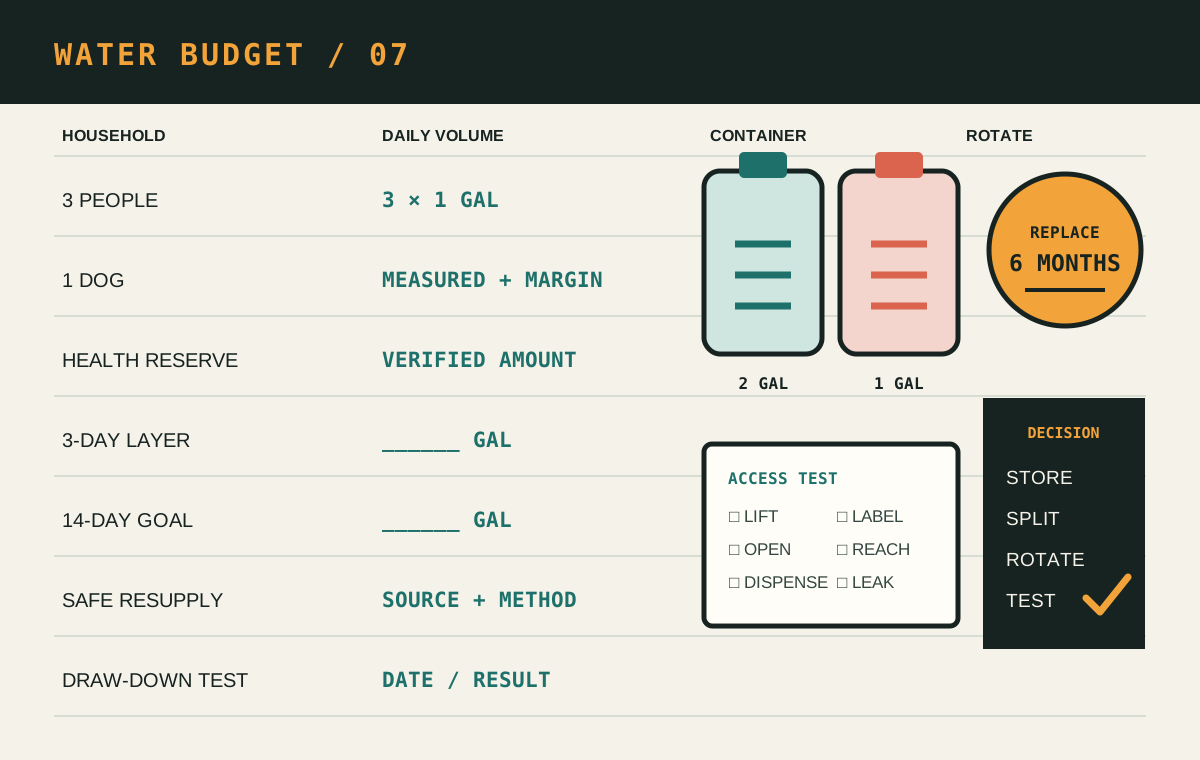 FIELD NOTE / 007
The working library
Seven ways to make readiness more useful.
Start with the decision that would make the biggest difference in your home this month.
Build an emergency water budget
Turn the one-gallon baseline into a plan that fits people, pets, health needs, lifting limits, storage and safe rotation.
Build the budget →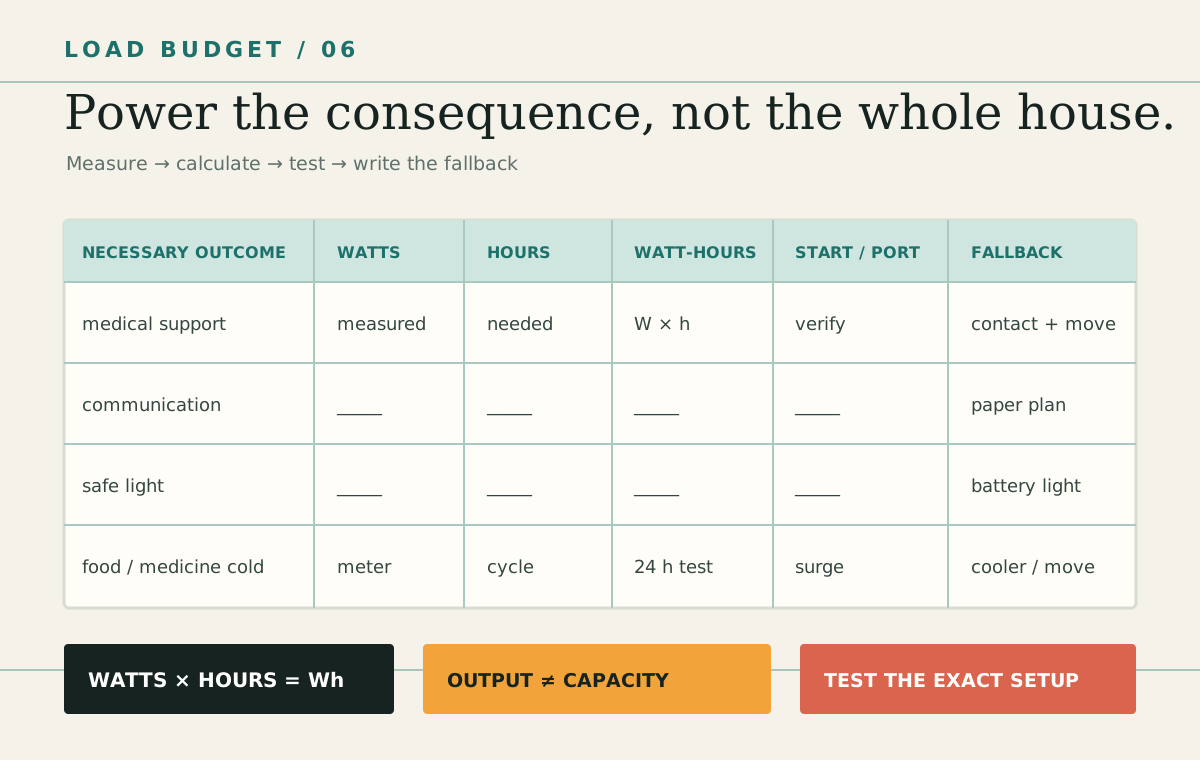
Build a backup-power load budget
Measure the loads that protect health, communication, light and cold storage before comparing battery capacity.
Build the budget →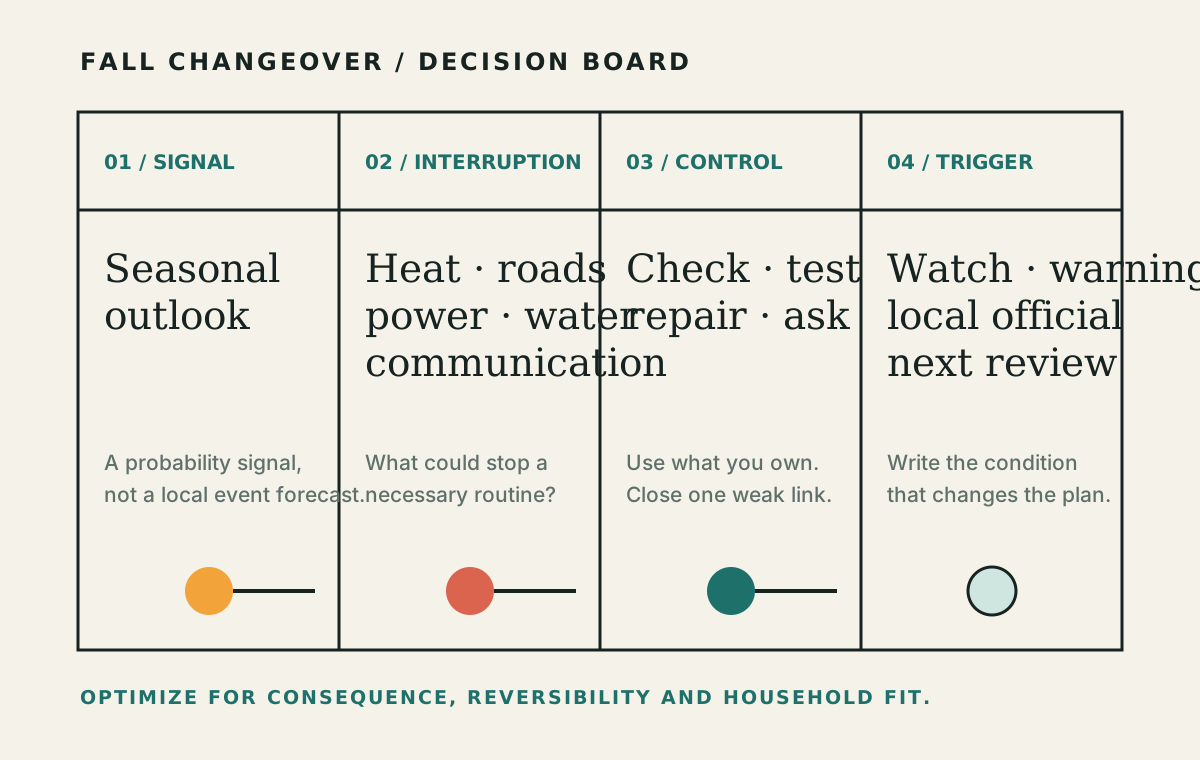
The 45-minute fall changeover audit
Translate a broad weather outlook into household checks, action triggers and one useful change.
Run the audit →
The 90-minute household risk audit
Rank the three interruptions most likely to hurt your household, then fix the cheapest weak link first.
Read the audit →A $50 preparedness ladder
Use one small monthly purchase to close a real gap instead of collecting duplicate gear.
Build the ladder →
The one-hour power-outage test
A low-cost rehearsal that reveals what fails when the lights, Wi-Fi and card reader stop working.
Run the test →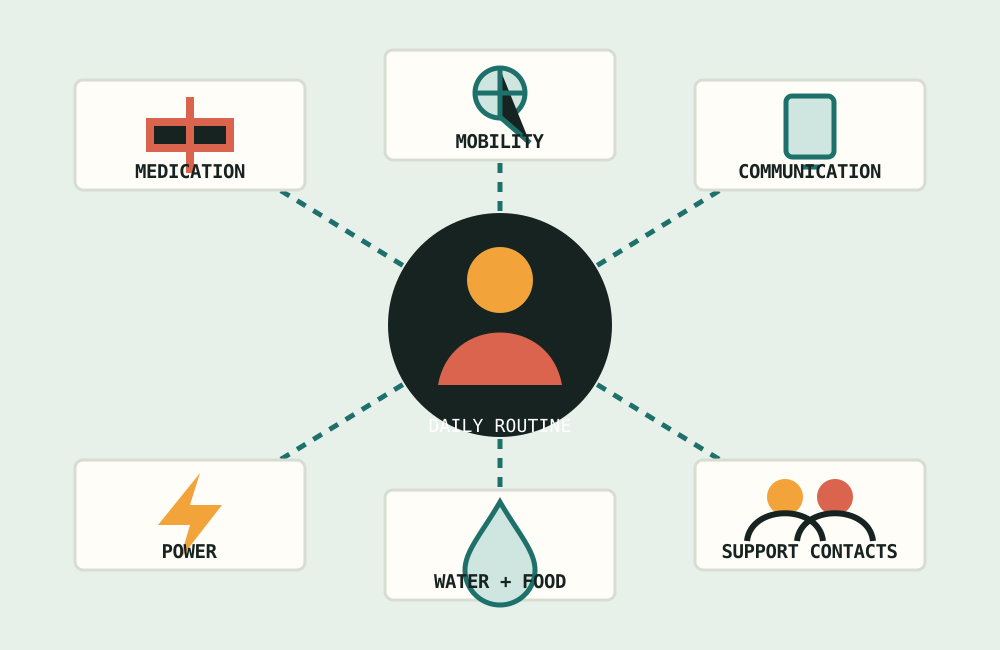
The 30-minute personal-needs dependency map
Find the daily supports whose failure would create a health or safety problem, then design one practical fallback.
Map the dependencies →Our method
Optimize for the life you will actually live.
01 / Name the risk. Use local hazards, current public guidance and your own household experience.
02 / Find the constraint. A plan can fail because of cost, weight, storage, mobility, medication or time.
03 / Test one change. A short, safe drill tells you more than a larger shopping list.
04 / Revisit the evidence. Dates, official recommendations and household needs change.